
Tuesday, June 17, 2014
I Dodged the Question

Monday, June 9, 2014
Why Do I Have to Learn History?
In a recent blog post William Chamberlain, a teacher in Noel Missouri and one of the people who has most influenced how I have organized EDM310 and the person for whom the William Chamberlain Prize for EDM310 Students which is awarded annually by the University of South Alabama is named,asked this question.
His post raises a very important question. Here is what he wrote:
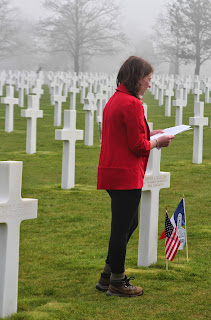

Funny how a little question, only seven words long, can throw one for a loop. I had a student ask me that question an hour ago and I am still reeling from it. I'm reeling because I can't verbalize an answer. The first thing I did was look online for an answer. Surely somewhere there is a cogent, well reasoned and yet simple answer. If there is one, I didn't find it. Google the question yourself and see what comes up. Better yet search videos using the question, plain horrible. Honestly, I doubt anyone can answer this one for me anyway. I have always loved history, I have loved the stories that come from history. I love the connections I see between seemingly disparate events. I love recounting stories like Peale's Mastadon because of the connections between art, science, and exploration. Now I am stuck trying to justify what I teach without any cogent thoughts appearing. Why do they have to learn history?I hope you will go to his post and read the many comments that have been left. They address Mr. Chamberlain's question in many different ways and are important for any aspiring teacher to consider. One of those comments was left by me and I am repeating it here so I can be sure all EDM310 students will read his post and my comment. At least I should be able to "be sure" but you never know. Here is my comment and two pictures I took at the time of the event that I recount in my comment.

I'll add a few thoughts. Last March I visited the American Cemetery in Normandy. Around one gravestone a fairly large group had gathered. One person was rubbing sand into the carved out portion of the gravestone so that the name could be read which is difficult to do in sunlight. I later found out the sand was from Omaha Beach which is within walking distance. Another person was reading a statement about Sgt. Grover L. Scroggins from Texas, the person who was buried there. She had obviously contacted relatives and her comments told a great deal about Sgt. Scroggins, an American soldier who had died in the Normandy Invasion seventy years ago. I was moved to tears, as were many of those gathered around. What was going on, I wondered, since it was obvious that those surrounding the grave were Americans. I inquired and found that they were students from an American university near Washington, D.C. who were studying history. Each student had been assigned an American soldier who was buried in the American cemetery at Omaha Beach. Each conducted research and prepared a statement to be read on the field trip the class took to France. The readings were recorded on video and sent to members of the soldier's family. But these students were studying history! Why were they doing this? To learn about what had happened in Normandy 70 years ago. To learn to do research. To learn to write. To learn to make a public presentation which will be shown to a lot of other people. To learn videography. To learn about how people react to the sacrifices of others. To learn the geography of one of the most important events of the last 100 years (or more). To learn to work with others (family members, other students, teachers, residents of France). History is a context for learning that goes way beyond knowing "what happened" and "when and where it happened." I find it hard to imagine a better and more powerful learning experience. History was the context, not the end objective. History should not be taught as a subject which is memorized and then burped back. Instead it should be a vehicle, a context, for active learning that has a public purpose. Just ask the students participating in this learning event. Or the family members who got the videos. Or even those who just happened to walk by and listen in as I did. I certainly learned a lot - about history and about learning! Maybe these thoughts will help us to understand how history can be a powerful context for learning. I suspect this approach would be equally powerful in any town in America.

Thursday, December 12, 2013
My Thank You To Mrs. Martin's Students
Today I received a whole bunch of thank you letters - in a video. It is better if you click here and watch it on YouTube
How wonderful! Thank you for sharing them with me.
Several of you asked questions in your letters. I will have to go back and write down the questions and then answer them. This is our final week of classes at the University so it will be next week before I do that. Come back later for my answers. I do have a few comments now, however.
1. Do I think people will ever live on the moon? Probably in your lifetime!
2. Is it important to talk with old people? Absolutely. Even if they only have "flip phones"! You will learn a lot of history that way. You will be exposed to different ideas. You will expose the people with whom you talk to new ideas. Learning will take place and that is what we want to have happen.
3. One of you said you wanted to be a Dallas Cowboys Cheerleader. They are often considered to be the best cheerleaders. I am a Saints fan but I wish you good luck!
4. Many of you commented on my name: "amazing", "cool", definitely Strange! So Thanks from your old Strange friend!
Watch for more answers to your questions next week.
Here is my Thank You Video from Mrs. Martin's Baldwin County High School Classes. Thank you very much!
John Strange
Several of you asked questions in your letters. I will have to go back and write down the questions and then answer them. This is our final week of classes at the University so it will be next week before I do that. Come back later for my answers. I do have a few comments now, however.
1. Do I think people will ever live on the moon? Probably in your lifetime!
2. Is it important to talk with old people? Absolutely. Even if they only have "flip phones"! You will learn a lot of history that way. You will be exposed to different ideas. You will expose the people with whom you talk to new ideas. Learning will take place and that is what we want to have happen.
3. One of you said you wanted to be a Dallas Cowboys Cheerleader. They are often considered to be the best cheerleaders. I am a Saints fan but I wish you good luck!
4. Many of you commented on my name: "amazing", "cool", definitely Strange! So Thanks from your old Strange friend!
Watch for more answers to your questions next week.
Here is my Thank You Video from Mrs. Martin's Baldwin County High School Classes. Thank you very much!
John Strange
Saturday, April 13, 2013
Mistakes at the Masters: 4 Over
 1. Tiger did not drop in accordance with the rules on Hole #15. Whether he knew that is irrelevant but I think he did not realize it but would have known if he had stopped to think. Tiger 1 Over in Mistakes
2. The Masters Committee hurriedly looked at the drop while Tiger was on the 18th. They incorrectly determined that his drop was in "close proximity" to the original place from which he played. Committee 1 Over in Mistakes.
3. The Masters Committee looked again after Tiger had signed his scorecard and explained his drop. The Committee determined Tiger had not followed the rule on drops, acknowledged they were wrong in their original decision, and levied a 2 shot penalty for Tiger. Acknowledgement of mistake leaves the Masters Committee 1 Over in Mistakes.
4. Tiger accepted that decision. No change. Still Tiger 1 Over in Mistakes
5. The Masters Committee addressed the DQ possibility for signing an incorrect scorecard. The Committee, using a High Definition TV rule, decided that they could waive the DQ. The High Def TV rule is not applicable here. The issue is whether or not the Committee is responsible for advising players if they do not follow the rules. If so, then a rules official should be present on ALL shots. They were present with Guan. They were following Guan in person and informed him in person. They were NOT following Tiger in person. They did not communicate with Tiger on the golf course before he signed his score card. Is that their responsibility now? And is the High Def TV rule to be used to undo Committee mistakes? I do not think that is why the rule was added. Masters Committee 2 Over in Mistakes
6. Apparently Tiger will accept a wrong decision by the Committee. If so Tiger will be 2 Over in Mistakes
Total for two days: 4 Over for Mistakes (2 by the Committee, 2 by Tiger).
Correct Decisions:
1. The penalty for slow play for Guan. Masters Committee got this correct.
2. Guan accepted the penalty. 1 Correct for Guan.
Not a good day for the Masters. Not a good day for Tiger.
Friday, February 15, 2013
How the World Helps Me Teach Pre-Service Teachers
In Less Than 24 Hours!
It took less than 24 hours for the world to help me teach my pre-service teachers. That happens all the time but this time the process was especially interesting.
On January 24, nine days after the start of EDM310's Spring 2013 semester, one of my students (I will refer to the student as JJJJJJ) posted this on JJJJJJ's new blog:
I didn't even know about it until I received this Tweet from my good friend and mentor in blogging and commenting on blogs William Chamberlain 45 minutes after the first comment had been left:
Who were the individuals who left comments?
Will Richardson, the author of Will Richardson's Blog
Karl Fisch, author of The Fischbowl
Dorothy Burt author of Manaiakalani who helped teach me the power of blogging more than three years ago which I have discussed in detail in Kaia and Room 10 - Why Blogs and Commenting on Blogs are So Important
And 13 others including third grade teachers, math teachers, principals, education consultants, IT directors, art teachers, regional administrators and 3 who remain a mystery to me. Residents of New Zealand, Canada and at least eight different states in the United States. Truly a world of educators who help me teach. I thank them one and all. I never cease to be amazed by the power of blogging and commenting on blogs.
So What Is This All About?
Each semester I have my pre-service teachers comment on the blogs of their classmates (every week for 16 weeks), teachers (twice every four weeks - 8 posts in all for 4 different teachers from a list of over a hundred that I have compiled since I started EDM310 in the Summer term of 2010), and on kids' blogs (for 10 weeks on blogs of first through twelfth graders in classes all over the world.
The student involved in this story (whom I am calling JJJJJJ in this account) left a comment on a teacher's blog. JJJJJJ had only written two posts at the time JJJJJJ left the comment on Will Richardson's blog post We're Getting Rolled. The comment JJJJJJ left was
So what has been learned (or not learned)?
1. All posts must have a title. This requirement was not followed in this case.
2. Use proper grammar. Use the correct words to convey your message. This requirement was not followed in this case.
3. Identify yourself as a student in EDM310. This requirement was not followed in this case but, as I explained in class, there are many ways you leave trails when you use the Internet. Remember, as Anthony Capps said, "You are leaving an intellectual trail and you will be Googled!"
4. Post your C4T summaries after you have completed both parts of the C4T the assignments.
5. You are part of a world wide community of learners whether you realize it or not. That community is eager to join you in learning (and to help you do it).
6. The world will help you. That is why you will be developing a PLN. In these 16 comments there were 9 very useful links. Use them!
7. If you do a bit of searching (click on the names of those leaving comments, for instance) you can find even more links to important materials. You can also find worthy candidates to follow on Twitter and/or to add to your PLN as it begins to develop and flourish.
8. Blogs are indeed powerful - and useful. For you. And they will be for your students as well.
9. Mobile County, Baldwin County and even Alabama (despite being Champions in football) are a very small part of the world. The profession of education is practiced differently throughout the world. Learn about these differences.
10. You cannot learn except by doing. If you won't try something new you should not be going into a profession which has as its central focus learning (or at least should have).
11. You must not teach the way you are taught! If you intend to do so, change professions. NOW!
12. When you get offers of help, take them. Contact those who offer help via Twitter, email, or blog comments. You will be surprised by the responses you get.
13. Although this is beyond the scope of EDM310, I would argue that everything we do is based on opinions. We debate those opinions as a part of the learning process. Remember one of the mottoes of EDM310: Questions Are More Important Than Answers.
14. Don't jump to conclusions until you have made your best effort to understand and use the tools we use in class.
15. Use Twitter. See if you can't make it into your most important source of professional development as I have and as have many of the respondents to JJJJJJ's post and comment.
16. I will quote Dorothy Burt on this one since I want to avoid patting myself on the back:
The complete set of the comments left so far can be found in a separate post Complete Set of Comments Left for JJJJJJ.
It took less than 24 hours for the world to help me teach my pre-service teachers. That happens all the time but this time the process was especially interesting.
On January 24, nine days after the start of EDM310's Spring 2013 semester, one of my students (I will refer to the student as JJJJJJ) posted this on JJJJJJ's new blog:
JJJJJJ's Post had no TitleLess than 24 hours later the post had received 16 comments from some of the most influential education bloggers in the world. From New Zealand to Canada.
I have just viewed a teacher blog for the 1st part of C4T assignment it was a short post commenting on another teacher's blog or post. My thoughts are, it's all flutter and opinions and we all know what opinions are like, everyone has one. The subject was "school reform" and it's being screwed up by leading internet figures such as Gates, Zuckerberg and Jobs who are nicknamed as "big money guys".
My comment was on how does this help me be a better teacher or at the very least just a teacher. Somebody please explained to me why this class is important, because until the benefit of reading and writing these blogs are explained I'm going to have a bad taste in my mouth.
I didn't even know about it until I received this Tweet from my good friend and mentor in blogging and commenting on blogs William Chamberlain 45 minutes after the first comment had been left:

Who were the individuals who left comments?
Will Richardson, the author of Will Richardson's Blog
Karl Fisch, author of The Fischbowl
Dorothy Burt author of Manaiakalani who helped teach me the power of blogging more than three years ago which I have discussed in detail in Kaia and Room 10 - Why Blogs and Commenting on Blogs are So Important
And 13 others including third grade teachers, math teachers, principals, education consultants, IT directors, art teachers, regional administrators and 3 who remain a mystery to me. Residents of New Zealand, Canada and at least eight different states in the United States. Truly a world of educators who help me teach. I thank them one and all. I never cease to be amazed by the power of blogging and commenting on blogs.
So What Is This All About?
Each semester I have my pre-service teachers comment on the blogs of their classmates (every week for 16 weeks), teachers (twice every four weeks - 8 posts in all for 4 different teachers from a list of over a hundred that I have compiled since I started EDM310 in the Summer term of 2010), and on kids' blogs (for 10 weeks on blogs of first through twelfth graders in classes all over the world.
The student involved in this story (whom I am calling JJJJJJ in this account) left a comment on a teacher's blog. JJJJJJ had only written two posts at the time JJJJJJ left the comment on Will Richardson's blog post We're Getting Rolled. The comment JJJJJJ left was
Hey I'm suppose to post a comment as part of a college class assignment in Elementary Education. I was assigned to read your blog and I must say I have no freaking idea what the heck you're talking about and how your blog is useful to me as a future educator.A few people left additional comments on the post that referred to this comment. But the most important responses were left on the JJJJJJ's post in which JJJJJJ reported the comment he had left on the blog of the teacher assigned to JJJJJJ for the first C4T. That was JJJJJJ's second post ever. The irony is that JJJJJJ was not supposed to publish the summary of the post and of the comment left for the teacher until after JJJJJJ had done both parts of the assignment. I am glad JJJJJJ did not follow my instructions however, since the incident has provided an exciting and important learning experience for me, for all of my students, and, I suspect, many of the other participants in this event.
So what has been learned (or not learned)?
1. All posts must have a title. This requirement was not followed in this case.
2. Use proper grammar. Use the correct words to convey your message. This requirement was not followed in this case.
3. Identify yourself as a student in EDM310. This requirement was not followed in this case but, as I explained in class, there are many ways you leave trails when you use the Internet. Remember, as Anthony Capps said, "You are leaving an intellectual trail and you will be Googled!"
4. Post your C4T summaries after you have completed both parts of the C4T the assignments.
5. You are part of a world wide community of learners whether you realize it or not. That community is eager to join you in learning (and to help you do it).
6. The world will help you. That is why you will be developing a PLN. In these 16 comments there were 9 very useful links. Use them!
7. If you do a bit of searching (click on the names of those leaving comments, for instance) you can find even more links to important materials. You can also find worthy candidates to follow on Twitter and/or to add to your PLN as it begins to develop and flourish.
8. Blogs are indeed powerful - and useful. For you. And they will be for your students as well.
9. Mobile County, Baldwin County and even Alabama (despite being Champions in football) are a very small part of the world. The profession of education is practiced differently throughout the world. Learn about these differences.
10. You cannot learn except by doing. If you won't try something new you should not be going into a profession which has as its central focus learning (or at least should have).
11. You must not teach the way you are taught! If you intend to do so, change professions. NOW!
12. When you get offers of help, take them. Contact those who offer help via Twitter, email, or blog comments. You will be surprised by the responses you get.
13. Although this is beyond the scope of EDM310, I would argue that everything we do is based on opinions. We debate those opinions as a part of the learning process. Remember one of the mottoes of EDM310: Questions Are More Important Than Answers.
14. Don't jump to conclusions until you have made your best effort to understand and use the tools we use in class.
15. Use Twitter. See if you can't make it into your most important source of professional development as I have and as have many of the respondents to JJJJJJ's post and comment.
16. I will quote Dorothy Burt on this one since I want to avoid patting myself on the back:
I would like to let you know that this class [EDM310] is the envy of educators around the globe...We enjoy having a number of your classmates visit our children's blogs (at Pt England School) and my own blog and are always envious when we track back and see the latest things you all are being taught...Be very very thankful.17. We are part of a worldwide educational community as I have said often in class. If you did not believe me then, I hope these events have convinced you that I am correct in that statement.
The complete set of the comments left so far can be found in a separate post Complete Set of Comments Left for JJJJJJ.
Complete Set of Comments Left for JJJJJJ
The following comments were left for JJJJJJ. To understand their meaning and the learning derived from them see my post How the World Helps Me Teach Pre-service Teachers.
Comments Left for JJJJJJ
Will Richardson January 24, 2013 at 2:28 PM
Thanks for reading my blog and for leaving the comment. I learned a great deal about you and your class from the interaction.
You are right to wonder why blogs might be important. I doubt anything I can say about the tool itself would convince you of its worth; you'll just have to keep writing and commenting and see how things evolve. Suffice to say blogging has transformed the way I think about learning and education because it has connected me to thousands of smart, brilliant people around the world who on a daily basis help me understand kids and schools and classrooms more deeply than I could sitting in a classroom taking a required tech course that seems at first blush to have little relevance to the modern world.
The barrier is that it's clear you're expecting to teach the way you were taught. I found it really interesting that your preferred method of working with kids is "I do" "we do" "you do" (as noted on a previous blog post), a method that will probably do a great job of getting kids ready for standardized tests but will do nothing to prepare them for the real world of learning that now exists. As I parent of two teenagers, I frankly shudder at the thought.
You have a choice, JJJJJJ. You can choose to look at social technologies as a fad that seems to be a minor inconvenience in your worldview, or you can be open to the idea that education and learning are changing dramatically because of them. As an aspiring educator who I would hope would also aspire to a model learner for his students, it might be good to put some time into reading and reflecting on what's happening outside your classroom and thinking deeply about how these technologies are rewriting the realities of teaching and schooling. If you'd like some places to start that work, I'd be happy to supply some links.
Karl Fisch January 24, 2013 at 2:18 PM
Well, my first suggestion would be to read a bit more of Will's blog as opposed to just that post. I think it's tough if you're coming into the conversation in the middle, and I think it's safe to say that that post was intended more for the regular readers that are part of the on-going conversation. I think if you read a bit more you'll find some value.
And, you're right, it is all "opinions" - but opinions that are informed by experience, practice, constructive dialog, and a whole lotta thought. It's folks trying to figure out - together - what's best for their students. I think that if you join this conversation it certainly has the potential to make you a better teacher. And citizen.
RBurkett January 24, 2013 at 2:37 PM
Welcome to the conversation, JJJJJJ. I believe the ability to connect with other educators has been greatly enhanced by internet tools like Blogs, Twitter, and other social media. Should you decide to become a teacher, you will quickly learn that one of the pitfalls of the current "system" is that you can very quickly feel like you are working in isolation without the time or ability to connect with other teachers. This connection is a critical component in moving toward the goal of becoming a creative, equipped, master teacher. Ongoing conversations enable you to share your ideas about what works best in schools, what methods seem to best meet specific student needs, what technologies are available to help your students, what classroom management strategies exist to support you, how to handle disruptive or difficult students (or parents), how to assure your students are learning, and most importantly, how to grow and stay informed in your chosen profession. Blogs and other web-based forms of communication mean that teachers no longer have an excuse to remain entrenched in ineffective classroom practice because they have access to the collective wisdom, experience, data, and research of the entire educational community. While you might not have found value in this particular blog post, I would encourage you to continue to explore and to engage your colleagues in productive dialogue about your practice and what's best for students under your care. A teacher who insists on remaining isolated and uninformed is one I would simply not hire for my school, so personal and professional growth is vital to your success in the field. I wish you all the best and the richest rewards that come with the noble, yet very complex and difficult tasks found within the teaching profession.
J. Yantho January 24, 2013 at 2:38 PM
It sounds like you are surprised that a blog post contained an opinion. Education can be tricky and lots of people have lots of ideas on how to make it better. I would suggest that when you read a blog post regarding education, that you continue to research the topic until you have a "freaking idea" or at least keep an open mind.
Education reform is a hotly debated topic right now. There are many parties pulling in different directions. People that want to make money through charter schools, people who want to make money in ed-tech, people who want to make money by creating curriculum that every American student must consume - oh, and the people that want education to actually BE better. Understanding where education "may" be headed (good and/or bad) is very important to deciding how you can be a better teacher, or at least better prepared to teach in this "brave new world."
Sometimes when we have been out of the classroom for a while it's hard to get back that spirit of curiosity and a thirst for knowledge. As a teacher, however, I think it is pretty important that we have the mentality of a student for life.
Jonathan Palles January 24, 2013 at 2:43PM
As a first year teacher, I have found Mr. Richardson's posts invaluable. Part of the problem you may be having is exactly what Mr. Fisch pointed out: you are coming in in the middle of the conversation.
When I first started learning about technology in the classroom and forming PLC's (Professional Learning Communities) I was completely lost. However, my district continued to emphasize the importance of forming a PLC. As I began doing my own research and developing a direction for my class, I started finding many teachers using methods that would help me to structure my classroom differently than a "traditional" classroom. I began following these teachers on Twitter and other online networks. I began to find lots of great FREE resources to use in my classroom. I already knew that the "traditional" classroom is no longer a viable option, but I didn't know how to break away from that model. By reading resources provided by Mr. Richardson (and many others) I have begun to develop new strategies to bring my class into the future, instead of repeating the past.
Technology is here and it's not going away. With all the resources at our fingertips, learning facts is no longer as important. What is important is learning to navigate and locate viable information for yourself. We need to teach our students how to problem solve and locate information for themselves. I don't have all the answers to help them accomplish that, so I learn from people all over the world who have developed strategies that I can use. I recommend that we all get plugged in and help each other out to navigate this extremely exciting time in education.
Niki January 24, 2013 at 2:46 PM
Maybe you need to check out some great classroom blogs to find inspiration! Poke around some links from here to start with: Edublogs Best Class Blogs for 2012
Kristy_Vincent January 24, 2013 at 2:54 PM
Well hello there! The power of blogs and social media as a whole is the exact experience you are having now if you have read down this far.
Will shared his thoughts (or opinions) on a particular "hot button" topic in education on his personal blog. You responded (all part of that free speech deal). AND all the world saw! When you were in the K-12 classroom it may have looked something more like this:
Will read an article in the newspaper. He wrote a letter to the editor. A week letter said letter is published. You read the letter Will wrote and you respond. A week later, it gets published. By then, Will is on vacation (and won't get to your response until the week later when he returns). Conversation over!
Today, Will shared his post (as he does most of his posts) on Twitter. The 33,000+ people that follow Will on Twitter have read his post, your comment, and now your post. Your post isn't on a Post-It note in the hallway. It is on the internet. The world wide, vast-reaching, ever changing internet. Through the power of blogs and social media, people like Will and the first year teacher in the one room school house in Central Texas meet. They can talk. They can help each other. That's why we are here. We are educators. We care! As a whole group we lean on one another for inspiration, frustrations, and ideas. We band together to truly change education because we care about children. The technology of today allows us to do so at rapid fire speed. It's an amazing!
Brandon Raymo January 24, 2013 at 2:58 PM
... [A]lthough you did not find that particular blog post helpful, your comment on the blog made me think about the classroom. If you were the teacher and required your class to read and comment on a blog, would your comment be acceptable to you the teacher?
Disagreement and not understanding are all a part of learning. We can disagree and not understand in a respectable manner, assuming you would know a thing or two about respect as you were a ... for some time.
I can also tell you that reading and commenting on blogs has been a great learning experience for me. I have learned more in the last few years as an avid blog reader and Twitter junkie than I did in 4 years of undergraduate work. The best part about the blogs and Tweets is that it causes me to think, question, and examine my own thoughts and practices. Thank you for commenting and giving me the opportunity to reflect. Good luck in your journey.
Kathy
It is interesting that now because of this question, there have been more resources shared and more advice and sharing to sort through. We as educators have an amazing opportunity in the world we live in today to also choose our learning. Even if we don't agree with what is being shared or stated it makes ask question and makes us think.
Darren Kuropatwa January 24, 2013 at 3:22 PM
Hi JJJJJJ,
I read how you hadn't come across anything that you thought might be useful to the work you'll be doing in the classroom so I thought I'd share some stuff with you:
This is my curated list of resources on Learning.
I'm not sure what you teach but you might find these Writing Prompts or Photo Prompts useful somewhere down the line.
I'm a math teacher. You can have all my stuff. There's more here. If you go all the way back to my earliest slidedecks (saved from my SMARTboard each class every day) you can see how my teaching and use of the IWB evolved. I hope something in all this helps you in your classroom in some small way.
Best wishes to you! This is a great time to be a teacher. ;-)
Cheers,
Darren
Jon January 24, 2013 at 3:40 PM
JJJJJJ,
I would be interested to know which part of the experience leaves a bad taste in your mouth? Is it the difficulty learning to use technology? The work of reflecting on your own preferences? The difficulty in understanding a perspective different than your own? The task of critically analyzing the opinions of another person to determine the merits of them?
You asked for somebody to explain to you how reading and writing these blogs will help you become a teacher.
Regardless of the content of the specific blog post you read, it appears that by going through the process, you are learning some skills that are vital to becoming an effective educator. Some of these skills include self-reflection, critically analyzing information, identifying the perspective of another person, and the ability to use technology.
Specifically, this is preparing you to be a teacher in the following ways:
You have been asked to understand the perspective of another person. This is vitally important to educators so that we can understand what motivates students to take ownership of their own learning.
You are now experiencing the process of developing knowledge through an exchange of ideas between different people, as opposed to simply transferring rote knowledge to a passive receptacle. I imagine this is a growth experience for you.
You are learning how to use technology to communicate and to express your throughts. Based on your first couple posts, it appears that this is a new experience for you, and a skills set which you will need to increase significantly in order to be an effective educator.
You are learning that teachers are treated as public figures. You are working through the conflict between your desire for personal privacy and the public role of teachers.
You are being asked to reflect on your own personal biases, prejudices, world view, and preconceptions of teaching and learning. All effective educators do this continually.
Frankly, the tone of your comments makes me doubt that you will be receptive to this response. (Perhaps that just my own opinion.) However, my observation of your writing leads me to believe that your reluctance (or resistance) to learn from the knowledge and experience of others is your greatest hurdle to becoming an effective educator.
I hope you do find the value of learning as you work through these challenges. That's the nature of learning, and becoming a good learner is the first step toward becoming a good educator.
thegeometryteacher January 24, 2013 at 4:05 PM
I will mirror what many of the earlier posts are saying. Blogging is way into a conversation. It is a conversation that is rich and broad and includes TONS and TONS of experiences, backgrounds, successes and failures.
Bottom line: There is a group of people who are blogging for the purpose of becoming better educators. This is surely why I keep up my blog. I hope to offer something to the conversation and I hope to get something back that will benefit my students and my community.
That having been said, my blog isn't what it was when it started. As I've posted and commented and explored and participated and read, it continues to evolve, just as I continue to evolve as an educator.
I don't think that it is necessary to participate in the blogging community to become a good educator, but I think there is an affordable, diverse and flexible set of resources available throughout the community to take advantage of.
Roderick Vesper January 24, 2013 at 4:23 PM
JJJJJJJ - I will keep this short and simple. I teach differently now than I did earlier in my career, because I sought out passionate and engaging voices of other educators via blogs and Twitter. I began just wallowing in the quagmire of voices, and have now edited it down to a handful of voices that challenge me, and voices that affirm my current path. Sometimes the most successful things that happen in my class in a given year come from ideas that have been "borrowed" from those voices. Things I would never have thought of in the isolation of my own classroom.
One other thing that I think is important to mention: if you are not interested in the education reform conversation now, you will be, because it will invade your classroom on a daily basis.
Best of luck as you continue your studies.
Andrew Shortell January 24, 2013 at 4:27 PM
Opinions lead to investigation lead to thinking lead to research and hopefully publishing which then becomes literature which then carries credibility. So opinion is good! Sometimes it is completely wrong or completely right but mostly way in between. We need to lead by example. I am trying to implement change in my school and my classrooms, however students resist change in many cases because that is not what they are used to. They are in a comfort zone that is easy - they do not have to do much work if they stay in teh system and it stays the way it has always been - in their experience @acsbear8
Gerald AungstJanuary 24, 2013 at 6:18 PM
JJJJJJ, for me the power of a blog is not just that I can learn about the ideas and opinions of others, but that I get to engage the writer in a conversation about those opinions. If I disagree, I can challenge them and deepen my understanding (and perhaps theirs as well). Through my blog and the others I read, I've connected with people and ideas and ways of thinking about education that I would otherwise not have encountered.
Dorothy January 26, 2013 at 2:59 AM
Kia ora JJJJJJ,
In response to
"Somebody please explained to me why this class is important" I would like to let you know that this class is the envy of educators around the globe. Because you have the luxury of having this class, you can have no idea what it is like to be a preservice teacher at an institution that provides no preparation for 21st century learning and teaching environments. Last year I worked with 4 new teachers who landed in 1:1 classes for their first teaching job and they had had NO preparation during their training for this. They had been trained for a world of paper, pencil and textbooks - and that world is disappearing like the Titanic with it's bow dipping under the water.
We enjoy having a number of your classmates visit our children's blogs (at Pt England School) and my own blog and are always envious when we track back and see the latest things you all are being taught.
I am trying to think of the hashtag equivalent to #firstworldproblem for your situation, but am stumped. One of your other commentators may be able to help here :)
Be very very thankful
Dorothy
Auckland, New Zealand
Comments Left for JJJJJJ
Will Richardson January 24, 2013 at 2:28 PM
Thanks for reading my blog and for leaving the comment. I learned a great deal about you and your class from the interaction.
You are right to wonder why blogs might be important. I doubt anything I can say about the tool itself would convince you of its worth; you'll just have to keep writing and commenting and see how things evolve. Suffice to say blogging has transformed the way I think about learning and education because it has connected me to thousands of smart, brilliant people around the world who on a daily basis help me understand kids and schools and classrooms more deeply than I could sitting in a classroom taking a required tech course that seems at first blush to have little relevance to the modern world.
The barrier is that it's clear you're expecting to teach the way you were taught. I found it really interesting that your preferred method of working with kids is "I do" "we do" "you do" (as noted on a previous blog post), a method that will probably do a great job of getting kids ready for standardized tests but will do nothing to prepare them for the real world of learning that now exists. As I parent of two teenagers, I frankly shudder at the thought.
You have a choice, JJJJJJ. You can choose to look at social technologies as a fad that seems to be a minor inconvenience in your worldview, or you can be open to the idea that education and learning are changing dramatically because of them. As an aspiring educator who I would hope would also aspire to a model learner for his students, it might be good to put some time into reading and reflecting on what's happening outside your classroom and thinking deeply about how these technologies are rewriting the realities of teaching and schooling. If you'd like some places to start that work, I'd be happy to supply some links.
Karl Fisch January 24, 2013 at 2:18 PM
Well, my first suggestion would be to read a bit more of Will's blog as opposed to just that post. I think it's tough if you're coming into the conversation in the middle, and I think it's safe to say that that post was intended more for the regular readers that are part of the on-going conversation. I think if you read a bit more you'll find some value.
And, you're right, it is all "opinions" - but opinions that are informed by experience, practice, constructive dialog, and a whole lotta thought. It's folks trying to figure out - together - what's best for their students. I think that if you join this conversation it certainly has the potential to make you a better teacher. And citizen.
RBurkett January 24, 2013 at 2:37 PM
Welcome to the conversation, JJJJJJ. I believe the ability to connect with other educators has been greatly enhanced by internet tools like Blogs, Twitter, and other social media. Should you decide to become a teacher, you will quickly learn that one of the pitfalls of the current "system" is that you can very quickly feel like you are working in isolation without the time or ability to connect with other teachers. This connection is a critical component in moving toward the goal of becoming a creative, equipped, master teacher. Ongoing conversations enable you to share your ideas about what works best in schools, what methods seem to best meet specific student needs, what technologies are available to help your students, what classroom management strategies exist to support you, how to handle disruptive or difficult students (or parents), how to assure your students are learning, and most importantly, how to grow and stay informed in your chosen profession. Blogs and other web-based forms of communication mean that teachers no longer have an excuse to remain entrenched in ineffective classroom practice because they have access to the collective wisdom, experience, data, and research of the entire educational community. While you might not have found value in this particular blog post, I would encourage you to continue to explore and to engage your colleagues in productive dialogue about your practice and what's best for students under your care. A teacher who insists on remaining isolated and uninformed is one I would simply not hire for my school, so personal and professional growth is vital to your success in the field. I wish you all the best and the richest rewards that come with the noble, yet very complex and difficult tasks found within the teaching profession.
J. Yantho January 24, 2013 at 2:38 PM
It sounds like you are surprised that a blog post contained an opinion. Education can be tricky and lots of people have lots of ideas on how to make it better. I would suggest that when you read a blog post regarding education, that you continue to research the topic until you have a "freaking idea" or at least keep an open mind.
Education reform is a hotly debated topic right now. There are many parties pulling in different directions. People that want to make money through charter schools, people who want to make money in ed-tech, people who want to make money by creating curriculum that every American student must consume - oh, and the people that want education to actually BE better. Understanding where education "may" be headed (good and/or bad) is very important to deciding how you can be a better teacher, or at least better prepared to teach in this "brave new world."
Sometimes when we have been out of the classroom for a while it's hard to get back that spirit of curiosity and a thirst for knowledge. As a teacher, however, I think it is pretty important that we have the mentality of a student for life.
Jonathan Palles January 24, 2013 at 2:43PM
As a first year teacher, I have found Mr. Richardson's posts invaluable. Part of the problem you may be having is exactly what Mr. Fisch pointed out: you are coming in in the middle of the conversation.
When I first started learning about technology in the classroom and forming PLC's (Professional Learning Communities) I was completely lost. However, my district continued to emphasize the importance of forming a PLC. As I began doing my own research and developing a direction for my class, I started finding many teachers using methods that would help me to structure my classroom differently than a "traditional" classroom. I began following these teachers on Twitter and other online networks. I began to find lots of great FREE resources to use in my classroom. I already knew that the "traditional" classroom is no longer a viable option, but I didn't know how to break away from that model. By reading resources provided by Mr. Richardson (and many others) I have begun to develop new strategies to bring my class into the future, instead of repeating the past.
Technology is here and it's not going away. With all the resources at our fingertips, learning facts is no longer as important. What is important is learning to navigate and locate viable information for yourself. We need to teach our students how to problem solve and locate information for themselves. I don't have all the answers to help them accomplish that, so I learn from people all over the world who have developed strategies that I can use. I recommend that we all get plugged in and help each other out to navigate this extremely exciting time in education.
Niki January 24, 2013 at 2:46 PM
Maybe you need to check out some great classroom blogs to find inspiration! Poke around some links from here to start with: Edublogs Best Class Blogs for 2012
Kristy_Vincent January 24, 2013 at 2:54 PM
Well hello there! The power of blogs and social media as a whole is the exact experience you are having now if you have read down this far.
Will shared his thoughts (or opinions) on a particular "hot button" topic in education on his personal blog. You responded (all part of that free speech deal). AND all the world saw! When you were in the K-12 classroom it may have looked something more like this:
Will read an article in the newspaper. He wrote a letter to the editor. A week letter said letter is published. You read the letter Will wrote and you respond. A week later, it gets published. By then, Will is on vacation (and won't get to your response until the week later when he returns). Conversation over!
Today, Will shared his post (as he does most of his posts) on Twitter. The 33,000+ people that follow Will on Twitter have read his post, your comment, and now your post. Your post isn't on a Post-It note in the hallway. It is on the internet. The world wide, vast-reaching, ever changing internet. Through the power of blogs and social media, people like Will and the first year teacher in the one room school house in Central Texas meet. They can talk. They can help each other. That's why we are here. We are educators. We care! As a whole group we lean on one another for inspiration, frustrations, and ideas. We band together to truly change education because we care about children. The technology of today allows us to do so at rapid fire speed. It's an amazing!
Brandon Raymo January 24, 2013 at 2:58 PM
... [A]lthough you did not find that particular blog post helpful, your comment on the blog made me think about the classroom. If you were the teacher and required your class to read and comment on a blog, would your comment be acceptable to you the teacher?
Disagreement and not understanding are all a part of learning. We can disagree and not understand in a respectable manner, assuming you would know a thing or two about respect as you were a ... for some time.
I can also tell you that reading and commenting on blogs has been a great learning experience for me. I have learned more in the last few years as an avid blog reader and Twitter junkie than I did in 4 years of undergraduate work. The best part about the blogs and Tweets is that it causes me to think, question, and examine my own thoughts and practices. Thank you for commenting and giving me the opportunity to reflect. Good luck in your journey.
Kathy
It is interesting that now because of this question, there have been more resources shared and more advice and sharing to sort through. We as educators have an amazing opportunity in the world we live in today to also choose our learning. Even if we don't agree with what is being shared or stated it makes ask question and makes us think.
Darren Kuropatwa January 24, 2013 at 3:22 PM
Hi JJJJJJ,
I read how you hadn't come across anything that you thought might be useful to the work you'll be doing in the classroom so I thought I'd share some stuff with you:
This is my curated list of resources on Learning.
I'm not sure what you teach but you might find these Writing Prompts or Photo Prompts useful somewhere down the line.
I'm a math teacher. You can have all my stuff. There's more here. If you go all the way back to my earliest slidedecks (saved from my SMARTboard each class every day) you can see how my teaching and use of the IWB evolved. I hope something in all this helps you in your classroom in some small way.
Best wishes to you! This is a great time to be a teacher. ;-)
Cheers,
Darren
Jon January 24, 2013 at 3:40 PM
JJJJJJ,
I would be interested to know which part of the experience leaves a bad taste in your mouth? Is it the difficulty learning to use technology? The work of reflecting on your own preferences? The difficulty in understanding a perspective different than your own? The task of critically analyzing the opinions of another person to determine the merits of them?
You asked for somebody to explain to you how reading and writing these blogs will help you become a teacher.
Regardless of the content of the specific blog post you read, it appears that by going through the process, you are learning some skills that are vital to becoming an effective educator. Some of these skills include self-reflection, critically analyzing information, identifying the perspective of another person, and the ability to use technology.
Specifically, this is preparing you to be a teacher in the following ways:
You have been asked to understand the perspective of another person. This is vitally important to educators so that we can understand what motivates students to take ownership of their own learning.
You are now experiencing the process of developing knowledge through an exchange of ideas between different people, as opposed to simply transferring rote knowledge to a passive receptacle. I imagine this is a growth experience for you.
You are learning how to use technology to communicate and to express your throughts. Based on your first couple posts, it appears that this is a new experience for you, and a skills set which you will need to increase significantly in order to be an effective educator.
You are learning that teachers are treated as public figures. You are working through the conflict between your desire for personal privacy and the public role of teachers.
You are being asked to reflect on your own personal biases, prejudices, world view, and preconceptions of teaching and learning. All effective educators do this continually.
Frankly, the tone of your comments makes me doubt that you will be receptive to this response. (Perhaps that just my own opinion.) However, my observation of your writing leads me to believe that your reluctance (or resistance) to learn from the knowledge and experience of others is your greatest hurdle to becoming an effective educator.
I hope you do find the value of learning as you work through these challenges. That's the nature of learning, and becoming a good learner is the first step toward becoming a good educator.
thegeometryteacher January 24, 2013 at 4:05 PM
I will mirror what many of the earlier posts are saying. Blogging is way into a conversation. It is a conversation that is rich and broad and includes TONS and TONS of experiences, backgrounds, successes and failures.
Bottom line: There is a group of people who are blogging for the purpose of becoming better educators. This is surely why I keep up my blog. I hope to offer something to the conversation and I hope to get something back that will benefit my students and my community.
That having been said, my blog isn't what it was when it started. As I've posted and commented and explored and participated and read, it continues to evolve, just as I continue to evolve as an educator.
I don't think that it is necessary to participate in the blogging community to become a good educator, but I think there is an affordable, diverse and flexible set of resources available throughout the community to take advantage of.
Roderick Vesper January 24, 2013 at 4:23 PM
JJJJJJJ - I will keep this short and simple. I teach differently now than I did earlier in my career, because I sought out passionate and engaging voices of other educators via blogs and Twitter. I began just wallowing in the quagmire of voices, and have now edited it down to a handful of voices that challenge me, and voices that affirm my current path. Sometimes the most successful things that happen in my class in a given year come from ideas that have been "borrowed" from those voices. Things I would never have thought of in the isolation of my own classroom.
One other thing that I think is important to mention: if you are not interested in the education reform conversation now, you will be, because it will invade your classroom on a daily basis.
Best of luck as you continue your studies.
Andrew Shortell January 24, 2013 at 4:27 PM
Opinions lead to investigation lead to thinking lead to research and hopefully publishing which then becomes literature which then carries credibility. So opinion is good! Sometimes it is completely wrong or completely right but mostly way in between. We need to lead by example. I am trying to implement change in my school and my classrooms, however students resist change in many cases because that is not what they are used to. They are in a comfort zone that is easy - they do not have to do much work if they stay in teh system and it stays the way it has always been - in their experience @acsbear8
Gerald AungstJanuary 24, 2013 at 6:18 PM
JJJJJJ, for me the power of a blog is not just that I can learn about the ideas and opinions of others, but that I get to engage the writer in a conversation about those opinions. If I disagree, I can challenge them and deepen my understanding (and perhaps theirs as well). Through my blog and the others I read, I've connected with people and ideas and ways of thinking about education that I would otherwise not have encountered.
Dorothy January 26, 2013 at 2:59 AM
Kia ora JJJJJJ,
In response to
"Somebody please explained to me why this class is important" I would like to let you know that this class is the envy of educators around the globe. Because you have the luxury of having this class, you can have no idea what it is like to be a preservice teacher at an institution that provides no preparation for 21st century learning and teaching environments. Last year I worked with 4 new teachers who landed in 1:1 classes for their first teaching job and they had had NO preparation during their training for this. They had been trained for a world of paper, pencil and textbooks - and that world is disappearing like the Titanic with it's bow dipping under the water.
We enjoy having a number of your classmates visit our children's blogs (at Pt England School) and my own blog and are always envious when we track back and see the latest things you all are being taught.
I am trying to think of the hashtag equivalent to #firstworldproblem for your situation, but am stumped. One of your other commentators may be able to help here :)
Be very very thankful
Dorothy
Auckland, New Zealand
Wednesday, January 30, 2013
Competence and Accreditation

Why the harassment? Well, the University is getting ready for a SACS (Southern Association of Colleges and Schools - the regional accrediting body) visit this spring. Someone must have discovered that the University was supposed to document the qualifications of faculty to teach what they have been assigned to teach. Not a bad idea on the face of it.
But... the policy was adopted by SACS in January 2007 (six years ago) and updated in January 2011 (two years ago). And only now has the University of South Alabama gotten excited about doing the documentation required by SACS.
So they notified my chairman in early December and she notified me on December 3 that I had to generate the necessary supporting documents for the University within one week as fall term ends and Christmas break begins.
I find it somewhat ironic, and very inappropriate, that I have to do this 25 years after I was hired to teach the kind of courses that I have been teaching since I came to the University of South Alabama in January 1988 and that I have exactly one week to do it.
Nevertheless, I tried to help. I gathered materials that I thought would meet the requirements of SACS inspectors (should they deem to look). Our local consultant on how to prepare for SACS rejected my material because it summarized activities and lacked specifics such as dates and places of speeches, etc.
After several rounds of rewriting and revising materials, I obtained a copy of the the SACS requirements myself and prepared a document specifying exactly what SACS wants (in my opinion) that was organized using SACS’s headings for supporting documentation. The document I prepared is 13 pages long, contains 4,261 words, and is highly specific (listing dates and places but omitting moon phases). It also has links to a large number of documents that can be accessed online, movies and other video material that I have created for the course and otherwise, a series of podcasts I that I have done with my students and others, and numerous blogs including the EDM310 Class Blog.
This too was rejected and now I (and others) have stacked over 2,000 pages of printed material (most of which is accessible in electronic form) into a very tall stack of paper which will be put somewhere by the University secretaries for potential examination by SACS visitors.
An Update The powers that be have now certified that I am qualified to teach EDM310 Class Blog.. The 5 1/2 inch stack of paper has satisfied them. I had insisted (but lost) that since EDM310 has a policy of "No Paper In - No paper Out" that all of the material be in electronic form. I even generated a blog post with links to all of the printed material in .pdf form plus links to numerous videos, podcasts and blogs that constitute my course, my professional publications and other activities. Only five printed book chapters and journal articles remained in print form. That would not do. I had to submit everything in print. So I printed and printed and printed. I even bought my own ink for my color printer since printed copies of the EDM310 Class Blog are much better than black and white versions. Success. On Thursday January 31 I was approved to teach EDM310, the course, as I said earlier, I invented, designed, developed and have been teaching for three years . But the story does not end there. On Monday February 4, two working days after approval was granted, my Chair was told that everything in print form had to be converted to .pdf documents. I did not hear of that until after three secretaries had spent several hours each running the printed material through our laser printer converters. From .pdf to print to .pdf. Nietzsche was correct when he wrote "Insanity in individuals is something rare - but in groups, parties, nations and epochs, it is the rule." Just add university bureaucracies and you have it!
It may sound like I am complaining, and I am. But there are many serious issues that these events raise which should be discussed.
First, I contend that SACS places the burden on the University, not the individual, to gather, organize, and make available when requested the documentation SACS requires. Here is SACS statement: ”For all cases, the institution is responsible for justifying and documenting the qualifications of its faculty.” I think institution means the University and not me. I expect you will agree with that conclusion.
Second, I would suggest that December 3 before the SACS visit in the spring is rather late to begin collecting this material, especially since the SACS policy requiring such materials was adopted six years ago (or maybe even before). It is also interesting to note that I taught first taught EDM310 (the course in question) in the Summer 2001 term (two years before the last SACS visit). I must note, however, that even though it has the same name it was a very different course at that time. I began developing the new version of EDM310 in the Spring of 2009 and I implemented it in its current form in the Summer 2010 term.
Third, the University consultant helping prepare for the SACS visit still contends that I have not provided the material “they need” and that the material must be gathered in print form. My response was that I have provided what SACS needs but I will never be able to provide what “they” (whomever they refers to) want. I meant to suggest they look in the dictionary to find the difference between need and want. Perhaps in our next bureaucratic exchange I will do just that. I also contend that the provision of links to all of the material that I have now printed is not only sufficient but a much more intelligent way of gathering and storing information. We are talking about a course which teaches aspiring teachers to use technology and then we prohibit the use of such technology in making available material for SACS? Absurd. Maybe insane would be a better word. EDM310 in its current incarnation has always been green ("No paper in and no paper out") and we have to print the materials that are easily available online?
Fourth, it seems rather odd that I could continue to teach the same types of courses for 25 years and not have been deemed competent (or incompetent) to do so. Of course during that time I have also conducted numerous training activities (John: you can’t say this - list dates and times) for faculty, developed training blogs (they are available, dated, and used by other institutions in fact), received two major grants totaling $135,000 to further the work in technology that I have been doing, and have been the recipient of one national and two local awards for outstanding teaching and lifelong learning. This does not include 5 other institutional awards and one national award for teaching excellence received before I joined the University of South Alabama faculty. I might note that SACS states that one way to document the qualifications of faculty is to provide evidence of “Continuous Documented Excellence in Teaching.
Fifth, and most importantly, it is clear from the SACS policy that it is sufficient to cite the degree as sufficient evidence where the degree is “in the teaching discipline.” So that means that my Ph.D degree from Princeton (awarded in 1966) would be sufficient evidence to demonstrate that I am qualified to teach politics (Princeton calls the discipline Politics) and perhaps Political Science (the term used by many other graduate schools). How absurd. Yes, there are aspects of politics that affect all areas of our life. And we are witnessing a bureaucratic example in the events described in this post. I am absolutely qualified to teach what I teach but I would have to work very hard to prepare to teach politics since it has been 40 years since I taught a course “in the discipline” in which I received my degree.
Shall we start a discussion about competence to teach? Competence is far more than having a degree in a specific discipline, despite the policies of SACS (and I suspect all of the regional accrediting societies).
Leave you comments to get the discussion going!
Monday, April 16, 2012
Facts
I often say facts are irrelevant. My wife (who taught school for over 30 years) always argues with me when I say that. I mean it, however. Facts are often disputed, even things we consider as facts.
I remember sitting next to a member of the New Jersey State Board of Education just before I was to give a speech. He was beaming with pride when he told me that finally the Board was insisting that kids learn important historical facts such as when the Civil War started. I was rather surprised and asked him when that was - when the first shot was fired on American soldiers by rebels?; when slavery was introduced into the United States?; when the North freed itself from the economic need for slaves and began to try and force the agrarian South to end slavery?; when Lincoln signed the Emancipation Proclamation?; when the first seven rebelling states declared they were no longer part of the Union but instead had formed The Confederate States of America? You can make an argument for all of these "dates." And it is totally unimportant, I think, to have to know them. Instead it is important to want to answer the question; to know how to gather information that might result in an answer; to know how to gather evidence necessary to answer the question; to sort thorough the evidence to reach a tentative conclusion or conclusions; and then to clarify the question and ask new questions in order to start this process all over again.
Many students tell me "It is easy to find someone's opinion about a topic on the internet but finding the actual facts isn't as easy." Correct. In fact we should be as skeptical of "facts" as of opinions. It is the thinking process that I see as critical for an educated person. If we merely dispense "facts" - our facts - then we fail as educators. If we only test for facts, we are doing our students a great disservice. We probably should not test for a knowledge of "facts" at all!
I remember sitting next to a member of the New Jersey State Board of Education just before I was to give a speech. He was beaming with pride when he told me that finally the Board was insisting that kids learn important historical facts such as when the Civil War started. I was rather surprised and asked him when that was - when the first shot was fired on American soldiers by rebels?; when slavery was introduced into the United States?; when the North freed itself from the economic need for slaves and began to try and force the agrarian South to end slavery?; when Lincoln signed the Emancipation Proclamation?; when the first seven rebelling states declared they were no longer part of the Union but instead had formed The Confederate States of America? You can make an argument for all of these "dates." And it is totally unimportant, I think, to have to know them. Instead it is important to want to answer the question; to know how to gather information that might result in an answer; to know how to gather evidence necessary to answer the question; to sort thorough the evidence to reach a tentative conclusion or conclusions; and then to clarify the question and ask new questions in order to start this process all over again.
Many students tell me "It is easy to find someone's opinion about a topic on the internet but finding the actual facts isn't as easy." Correct. In fact we should be as skeptical of "facts" as of opinions. It is the thinking process that I see as critical for an educated person. If we merely dispense "facts" - our facts - then we fail as educators. If we only test for facts, we are doing our students a great disservice. We probably should not test for a knowledge of "facts" at all!
Monday, February 27, 2012
Lectures - Part 1

Lectures have been in the spotlight recently.
Jeffrey R. Young writes that Michael Wesch, an anthropologist at Kansas State University, whom Young describes as "having been on the lecture circuit for years touting new models of active teaching with technology" is now "rethinking the fundamentals of teaching – and questioning his own advice." Young says Wesch now has :a new message" which is that it doesn't matter which method [interactive tools or the lecture] you use if you do not first focus on one intangible factor: the bond between professor and student."
Young then compares Wesch with Christopher Sorenson, a physics professor also at Kansas State, who "champions" the lecture approach despite the questions being raised about lectures as an appropriate method for teaching. Young quotes Sorenson as saying "The messenger, ironically, is more important than the message...If the messenger is excited and passionate about what they have to say it ... stimulates students to see what all this excitement is all about." Young contends that Sorenson believes "his job is less about being an expert imparting facts, and more about being a salesman convincing students that his material is worth their attention."
On February 15, 2012, three days after Young's article was published in The Chronicle of Higher Education, Daniel de Vise reported in The Washington Post that "The faculty at Johns Hopkins University in Baltimore has dedicated this academic year to finding alternatives to the lecture" in math, science and engineering. Mr. de Vise also reports that "Harvard University and even the White House have hosted events in which scholars have assailed the lecture." He goes on to report that "The lecture backlash signals an evolving vision of college as participatory exercise....The watchword of today is 'active learning.'
The lecture method is also being questioned at the secondary level as well as in college. On the same day that Young's article was published, Alan Schwarz, writing in The New York Times, reported that the schools in Mooresville, North Carolina have had to limit visitors to groups of 60 once a month to see the changes that have taken place with the introduction of new technologies, where "classrooms have moved from lecture to lattice, where students collaborate in small groups with the teacher swooping in for consultation...even though some teachers "resented having beloved tools – scripted lectures, printed textbooks and a predictable flow through the curriculum – vanish."
Lectures also appeared in the crystal ball of Alex Lindsay. He reported his vision of "The Future of Education" in a Google+ post on February 17, 2012. "Lectures the way we know them don't really exist. Most of school is divided into 4 processes: Movies, Games, Projects and Discussion." Discussions "are really global events: students attend from all over the world. Some are in theatres together, some are at home, some are in smaller event locations. Students at these events are of all ages...based on their achievement levels...Questions are posted and voted on by the group to percolate to the top and be discussed by the expert (or experts -- there are often people from given industries participating in these events). The events are productions, usually with intense graphics and TV-level production values."
In a similar fashion, Daphne Koller of the Stanford Artificial Intelligence Laboratory, in her New York Times essay “Death Knell for the Lecture : Technology is a Passport to Personalized Education” advocates the replacement of lectures with content delivered through video in “short bite size chunks.” She goes on to describe the forums that are part of Stanford courses now: Students can vote on questions” to be answered allowing “the most important questions to be answered quickly” which echoes Lindsay’s dream of global discussions with a similar feature. Knoll does not dream, however. She describes what Stanford is doing now and she believes that “by using technology in the service of education, we can change the world in our lifetime.”
So what do we make of this flurry of comments and discussions about lectures and their place in education? Let us take a closer look at what is being said.
Why are lectures useful?
Lectures are efficient in reducing the costs of educational institutions. They enable one •instructor to produce large numbers of credit hours. Since educational institutions charge for credit hours, lectures are “cost effective.”
•Lectures result in curated topics thereby limiting the time students have to spend on a particular topic. Of course, the curation sometimes brings charges that the curation is politically or personally motivated.
•Lectures often are effective in generating interest in a subject matter - “selling” a student, as Christopher Sorenson said, on the notion that certain subjects are “worth their attention.”
I would offer one comment here. First, it is interesting to note that in all of these musings on lectures, no one suggests that we have any evidence that lectures improve the learning of students.
Why abandon lectures?
•They are too long. Bite sized chunks are more appropriate for the short attention span of students.
•Students often find them boring and a waste of time.
Video presentations can break the limitations that lectures have since they are fixed in time and place.
•They often are not accompanied by activities which engage students in organizing, digesting, evaluating and using the information provided in lectures.
•They are not effective in promoting learning.
•The drop rate in lecture classes is very high.
•The information loss is great and immediate.
What would be better?
•A learning environment where faculty and students bond (Wesch).
•Video presentations (lectures, discussions) led by academics and practitioners (Lindsay)combined with active learning projects (Koller, Lindsay, Schwarz).
•“Flip classes” - classes where individualized instruction is provided in class preceded by video instruction delivered by technology (Koller).
•A system in which students vote on which questions and topics are “most important” and to be addressed first.(Koller, Lindsay)
•The use of products such as iBooks that combine audio, video, graphics, pictures and text into one delivery mechanism (Lindsay).
•Tutoring which Benjamin Bloom demonstrated in 1984 produces far better results than lectures (Koller).
What are the impediments to achieving a better replacement for lectures?
•Faculty do not like to change their delivery techniques. It is personally expensive to them in terms of time. In addition, replacing the lecture requires that faculty address questions they have not faced before such as what are the learning objectives they want their students to achieve and what techniques can lead to the attainment of those objectives.
•Technology plays a central role in all suggestions for change. The costs are often seen as a significant impediment to change.
•Tradition. Lectures are part of our culture and history - in schools, churches and other “cultural events.”
The discussions and debates about lectures and learning are underway. You should be joining them. As you do let me suggest that you first attempt to identify what the outcomes of education should be. I ask myself these three questions:
•What is it that I expect my students to know as a result of the learning environment I am creating and providing?
•What is it I expect my students to be able to do?
•What experiences do I want my students to have had? I am often asked why I include experiences in my set of learning outcomes since experiences are not outcomes. I do so because I believe experiences, especially those that involve regular and directed reflection, are important where the outcomes desired cannot be achieved in a short time frame but where we have evidence (or maybe just good hunches) that a set of experiences increases the likelihood that certain desired outcomes will be attained later in life. I think it is those outcomes that are the real reasons for classes such as Art Appreciation and Music Appreciation rather than the objectives that appear in the tests that accompany these courses: what composer?, what period?, what “school”?, and so on.
Start your thinking. Leave me comments. I will expand on my ideas in later posts. Be a part of that conversation.
Wednesday, October 5, 2011
Understand Sarcasm and Satire or You Might be Dangerously Irrelevant as an Educator

Dr. McLeod Tweeted me on Tuesday September 20 concerned about this: "There's a certain percentage of your students that completely misses the irony in 'Don't teach your kids this stuff' :)"
I responded: "Ah yes! And they want to be teachers... About a third [last semester] and probably this."
My guess was correct. 35% missed it this semester.
The failure to understand the post even drew the attention of m.williams-mitchell. Dr. Mcleod drew my attention to this comment in the middle of the EDM310 comments this semester:
um…could someone please reassure me that the requirement for the class was to respond to this post as though one DIDN’T UNDERSTAND THAT IT WAS SATIRE??? I’m beginning to fear for our future.Posted as a comment on Don't Teach Your Kids This Stuff. Please? by m.williams-mitchell, September 20, 2011 at 5:34 pm
And Now a Lesson
Let's look at the definitions of sarcasm and satire.
Definition of Sarcasm
sar·casm /ˈsɑɚˌkæzəm/ nounDefinition of Satire
1: the use of words that mean the opposite of what you really want to say especially in order to insult someone, to show irritation, or to be funny
Merriam Webster Learner's Dictionary
sat·ire noun \ˈsa-ˌtī(-ə)r\As juniors in college I would expect you to recognize sarcasm and satire when you encounter these literary devices. Obviously that is not the case. So it is time for learning!
1: a literary work holding up human vices and follies to ridicule or scorn
2: trenchant wit, irony, or sarcasm used to expose and discredit vice or folly
Merriam Webster Dictionary
1: a way of using humor to show that someone or something is foolish, weak, bad, etc. : humor that shows the weaknesses or bad qualities of a person, government, society, etc.
Merriam Webster Learner's Dictionary
Dr. McLoed's meaning should be clear to you, if your are able to recognize sarcasm and satire, when you read the very last portion of his Don't Teach Your Kids This Stuff. Please? post:
don't do any of it, pleaseRemember the Class Motto: I don't know. Let's find out.
really
'cause I'm doing all of it with my kids
can't wait to see who has a leg up in a decade or two
can you?
That is what we are undertaking to do.
Plagiarism

Plagiarism
There are now 128 students in EDM310. Seventeen of those did not do the Blog Post #5 assignment. Nine of those who did the assignment did not attempt to answer the question Who is Dr. Scott McLeod? That leaves 102 students who answered the question. Of those, 17 copied considerable portions of Dr. Mcleod's About Me material without attribution and without identifying the material copied and committed plagiarism as it is generally understood in academic communities. Another 17 used significant portions of that same material without attribution and without identifying the material copied and a very strong case could be made that they also committed plagiarism. Consequently, I am absolutely convinced that at least a third of this EDM310 class does not know about plagiarism (or doesn't care, or both). And you hope to be educators.
We must talk. About plagiarism. We will do so during Part 1 of the Mandatory Attendance Week.
Here are two things you must do to avoid plagiarism:
1. Always provide the source of the material (or ideas, conclusions, approaches or concepts). We do this with pictures using the TITLE modifier tag. In blogs, a very easy way is to provide a link to the source material. In papers, and you use footnotes following one of many possible style manuals.
2. Always put quoted material in quotation marks. If the passage quoted is long, indent it in a paper or put it un a blockquote in a blog (the quotation mark icon in the post area of a blog).
Yes, there are some exceptions to these two rules. We will discuss them next week. However, you can never be wrong if you follow these two rules.
Why is it important to know about plagiarism and how to avoid it?
1. You can get an F in a course or be dismissed from the University.
2. You can lose your job in the education community.
3. You can fail to teach your students and they may suffer the serious consequences cited above.
Why am I not bringing charges against at least 34 of you? Because I think you do not understand plagiarism and how to avoid it. I will not have that option if it happens again.
Wednesday, August 31, 2011
"I'm Scared"

Of what? I asked.
My caller was a new student in EDM310 who feared disclosing anything about herself or her family on the Internet. Why this fear?
There are predators on the Internet was the basis of her reply (she was afraid for her children), in addition to a fear of losing control over her privacy.
How do we, as teachers who have embraced the use of the internet, respond to such expressions of fear?
One response I always give is that if you want your kids (and you as an individual) to have an equal chance at economic (and political I would add) success in the new world, they must be skilled in and willing to use the most powerful communication and information tools available to them and others. Right now that is the internet and the associated communication tools that have been developed to extend our ability to interact freely and at no cost with practically anyone around the world using text, audio and video.
This answer, however, does not get at the fear of danger lurking "on the Internet." Usually the fear is expressed in terms of "being stalked" or being sexually or physically attacked.
We should then ask how often this happens as a result of interaction with the Internet.
If we read the papers or listen to District Attorneys (especially those running for office) you would think it is an extremely frequent occurrence. What do we know about interactions on the Internet? Here are some interesting figures. Chris Gayomali reported on July 1, 2011 that there are 200 million Tweets a day on Twitter. That is six trillion Tweets a month. What about Facebook? In one minute Gary Hayes (August 2011) estimates that there are 699,073 items shared on Facebook per minute! That is 41,944,380 per hour or 1 trillion a day.*
Now pretend that you are a stalker or some other kind or pervert that scares the living daylights out of pour souls just because you exist. How do you select from all the communications traffic whom to pick as your victim? A rather daunting task given the enormity of the communication events that you encounter! The answer is you troll. You fish for a victim. You try and get someone to respond to you. One way is to try and get people to accept you as a friend on Facebook or in chat rooms(or elsewhere) and share their personal stories, desires, fantasies, hopes and attributes. (Yes, sometimes those revelations are enhanced so they are more interesting, attractive or alluring). Now you, as a predator, have a much smaller pool of potential "victims" to work with. You know that they are "interested". They have identified themselves as potential cooperative participants, or at least have spiked your interest in them. Looking at thousands of blog posts, Facebook items or Tweets means fishing in too large a pond. You are now able to fish in a pond where the fish have indicated a possible willingness to bite. Now your efforts are far less daunting than surfing the entire communications network.
How do you protect yourself and your family? Not by hiding entirely from the Internet world. Instead you learn when and where to reveal what about you. My Mother told me over and over again not to accept rides from strangers. But she did not say that I could not get a ride home from school with Susie's mother. I was expected to learn how to make wise decisions and good choices. The same applies to the Internet.
You must teach your children (and you must learn yourself) how to safely use the Internet. Like crossing the street: look both ways before you cross and obey the lights. But do not refuse to ever cross a street!
One more thing. The greatest danger to you and your family is not "a pervert on the Internet." It is an automobile accident. Thirty-three percent of all deaths of 15-24 year olds in the USA come from an automobile accident. Forty six percent from all accidents. Think drinking and driving or texting and driving. Fifteen percent are homicides. The vast majority of these are caused by someone known to the victim. Thirteen percent are suicides. Eleven percent are diseases or congenital conditions.
Be aware. Not afraid. Help you family to learn to drive responsibly (no alcohol, no texting, no racing, etc. help your family to learn to use the Internet responsibly. And remember: The interactions you have on the Internet are a relatively minor part of your life. At least I hope you have a life other than an Internet life!
* Although not directly relevant to my argument in this post, I call to your attention the number of YouTime videos watched as reported by Gary Hayes far exceeds even the Facebook items shared. Are you ready? Here are Hayes' figures for Videos Watched on YouTube (August 2011):
Per minute: 2,097,221
Per hour: 125,833,260
Per day: 3,019,998,240
Per month: 93,619,945,440
Saturday, August 27, 2011
What Do We Want Our Students to Know, Be Able to Do, or Have Experienced?

I recently reread Neil Postman's Amusing Ourselves to Death. His major complaint is that TV has ended (or is in the process of ending) the Era of Exposition which he defines in this way: "Arguments, hypotheses, discussions, reasons, refutations or any of the traditional instruments of reasoned discourse..." (p. 148, 20th Anniversary Edition, Amusing Ourselves to Death.). He bemoans this change because he feels that the major traits of an educated person will be replaced with amusements. He goes on to contend that classrooms have been converted from educational centers into "a place where both teaching and learning are intended to be vastly amusing activities." (p. 148)
This led me to think about what I want my students to know, be able to do and have experienced. (I will have more to say later on the amusement portion of Postman's view of what has happened to education.) I think most desired outcomes for education can be found in these three categories. Some may question experiences. I respond that some learning activities have objectives which cannot be measured or evaluated immediately (such as art appreciation) require us to content ourselves with a set of experiences, especially when we have reason to believe that those experiences will lead to the outcomes at some point in time when we can evaluate their effectiveness. This deserves more discussion which i will reserve for a later post.
Back to my list. I will start with Do since I think that is the most important list.
1. Be able to write. I tell my students they must meet Mrs. Yollis' 3rd grade standards for grammar, spelling and capitalization. And they also must be able to effectively argue a position and be an effective peer reviewer.
2. Be able to read. Yes, we can now listen to most written works. And I listen to a lot of material that is also in print form. But listening is now enough. I want my students to know how to read. And I would that add I want them to want to read. I guess I need a values category for my objective.
3. be able to find information using the most effective tools available. We are nearing the time when "all information will be available at all times in all places." (Guttenberg II)
4. Be able to assess and validate the credibility of information.
5. Be able to apply the scientific method in his or her scholarly activities. More precisely
a. Be able to Ask Questions
b. Be able to Observe
c. be Able to Describe
d. be able to Compare
e. Be able to Contrast
f. be able to Categorize
g. be able to Analyze
h. be able to Hypothesize
i. Be able to Ask Questions
Now the Know:
I have no absolutes here. It all depends. More important are points 3 and 4 in the list of skills above.
And the "Have Experienced" list?
1. Have engaged in developing and maintaining a personal Learning Network or PLN. Why? Because the sources of our intellectual support are critical for a successful career and life.
Nothing we have to know? Well, we have to know a lot. But there is no universal list unless it is our name, address and phone number.
But what do we test for in school? In most cases what is known. And that seems to me to be a fatal flaw in our educational system.
Needed to complete this discussion are the levels or standards to be attained in the skills identified above as well as ways for evaluating them. But the points I wish to make here are two:
1. We do not articulate clearly the learning outcomes or objectives that we wish to address.
2. If what we test for defines those objectives for us, which it indeed does, then we are not focusing our efforts as educators where we should be!
Monday, February 14, 2011
Teaching in the 21st Century

Last Friday I posted notice of the Watson vs. Jeopardy Stars Event. Forty students left comments prior to my writing thispost. Over and over they wrote something like this: “I don’t want my students to depend on technology to gather information.” The suggested substitutes or additional methods for gathering information were libraries, classrooms, books, encyclopedias, hard work, pencils, paper, teachers. One student made it crystal clear: “A teacher’s job is to provide information.”
I have two response.
First, and most importantly, the assumption that underlies these responses is that learning = information. That is absolutely not true, even though our educational system has forced you to believe that it is true with its emphasis on burp-back education and machine readable tests. It makes me ill to think what our educational system has done to you. DO NOT LET IT CONTINUE IN YOUR CLASSROOMS!
Second, a sense of fear pervades at least half of the responses. What are the sources of those fears? First there is a fear that all information should not be available to everyone. One student compared the information available as a result of the new technologies as in need of restrictions similar to the restrictions we attempt to place on nuclear weapons. (He did admit that his position was a bit extreme.) Others suggested that "inappropriate" information might be available, or connections made with unsavory individuals. Still others suggested we could undermine the ability to write and spell, we could lose our jobs to machines, the emotion and excitement of human responses would disappear, students would become lazy, hard work would not be valued, thinking would be undermined, we could encounter severe difficulties in case of electronic or political actions that shut down technologies, we might become “robot chow,” intelligence would decrease over time, people would be less willing to learn facts, machines would take over thinking, “humans would become obsolete.”
Wow! What a list of fears. A few respondents, but only a few, expressed the fear that without the technologies their students or their children would be faced with severe economic difficulties and extreme competition from those who did have and use the tools to their maximum advantage. But several more admitted that they would not like it at all if they were separated from their cellphone tools!
Look again at the video assigned for last Sunday (2/13) - Kevin Robert’s Teaching In the 21st Century. Even though this video was renamed by one student Mr. Very Long Video , it is worth your attention for the full 9 and 3/4 minutes (my, how short your attention spans have gotten!) it takes to watch it. And then it deserves some additional time while you think about what it has to say about teaching since you intend to be “teachers.”
Here’s a quick summary for those of you without 9:49 to spare:
•If teachers are mere dispensers of information, our jobs are obsolete!
•We must teach our students how to validate, synthesize, leverage, communicate, collaborate with, problem solve with information.
A Strange interruption: How well can you do these things? Has anyone ever taught you how to do these things? Are you learning these things now in the College of Education?
We return to our program in progress:
•We must teach skills not facts.
•In addition to teaching students to remember, we must also teach them how to understand, apply, analyze, evaluate, create. Yes create!
•And we must teach them about responsibility, reliability, integrity, collaboration.
•We must rethink our classrooms. What tools should we and our students use? What problems should we ask our students to solve?
•Ask your students to explain, evaluate and justify their positions about contemporary, interesting issues that affect them.
•Your classrooms will have to be relevant, challenging, engaging. Not entertaining - engaging!
Another Strange interruption: You cannot, you must not teach the way you were taught! You must be a different kind of teacher in a different kind of world. If I thought you would, I would urge you to go back through Teaching In the 21st Century again. Slowly. Taking more than 9 3/4 minutes. It is worth you most careful consideration! We must also learn from our students. Thanks to Teri Hampton (Fall 2010) for bringing this most important video to my attention!
We return to our program in progress:
•These changes must start with YOU!
What Does It Mean to Teach in the 21st Century?
Saturday, January 29, 2011
Serendipity
My Aunt Mary Margaret Jessee Mayfield loved the word "serendipity." She taught it to me when I was very young. And I have been lucky to enjoy the fruits of serendipity all my life.
Serendipity struck again this week. Anthony Capps called to my attention a new post on the EDM310 Alumni Blog A light bulb moment by EDM310 alumnus Dina Tillman. I watched the movie and read her commentary and decided to have my EDM310 students watch the movie, read the post and answer a few questions.
There were four reasons for making this Special Assignment #1:
1. I wanted to make sure my students were regularly reading the EDM310 Class Blog
2. The video was short, fun and Dina's message emphasized an outcome I wish to foster: creativity
3. The assignment would draw attention to the EDM310 Alumni Blog, the only alumni blog (or even any activity) associated with an undergraduate course of which I am aware.
4. The video was supported by Volkswagen and the activity being shown in the video took place in Stockholm, Sweden. One of my objectives in EDM310 is to get my students out of Mobile, Alabama - at least virtually. This assignment furthered that objective.
Simple reasons for a relatively simple assignment.
But the responses of my students amazed me. You need to read the comments on the Assignment Post as well as Dina's original post on the Alumni Blog. Here is a sample of a very few of the most interesting comments:
"I realized that in order to lead people in a positive direction or to get a certain reaction, sometimes you have to find fun, creative ways of showing them how.:" (Whitney Hale)
"I hope that the red tape/requirements of teaching in high school won't keep me from remembering to make learning fun." (Lisianna Emmett)
"What an excellent thought to tie together! I know for myself, the teachers that I remember the most, the ones who really got through to me, were the ones who made learning fun. This should be our goal as future educators." (Erin Holton)
"I think that creativity is a great way to inspire "improvement" on many levels. And there's no doubt in my mind that we are perfectly capable of such 'light bulb' moments here in the U.S. as well, however, there are too many limiting factors here that prevent these types of innovations. Something like this would be met with hostility surrounding liability, possibility of injury, insurance responsibility, building code, etc...I think that with our current way of doing things under the constraints that we have willingly placed on ourselves, our 'light bulb' moments will be limited strictly to the arts and to the internet." (Richard Howell)
"Lets open up imagination in teaching and in our life and career. Sometimes as teachers it's easy to get caught up in the same everyday routine and you can use so many things to add imagination and fun into learning and in my opinion that's what you did here. It's this type of learning that we hang on to forever and always remember and not just 'burp back'!" (Lara Bishop)
"I will definitely try to think outside of the box. Especially after watching this video. Love, love, love the video!" (Tiffany Blanton)
"This video is so awesome and inspiring to me, and should be to all soon-to-be teachers. This video makes me realize that if we just take the time to think for a second we could make so many tasks in our daily life fun!" (Jessica Battles)
"I think this video is a really great example of how we as future educators can make it really enjoyable to do the right thing or learn to do new things. I'm glad that Dina posted this video to remind us all of how our classrooms should be run. This is also a good example of how we can motivate ourselves to do things we don't normally like to do." (Rebecca Warnburg)
"It inspired me to open my mind and think outside the box while also giving me the desire to enable my students to do the same. Thank you to Dina" (Jennifer Kelley)
"I completely agree with Dina about being a creative teacher who actually challenges students. I want to inspire my kids to not only learn my material, but to look for knowledge on their own as well. If I can make learning fun, exciting, and important, more children will excel and get the most out of life. These people simply made stairs into a piano and 66% more people took the stairs! Everyone has the power to change the world and we need to start now!" (Skye LaDart)
"The connection you made is awesome, and of course, I totally agree! Let's think of a fun-theory way to teach equivalent fractions. Maybe we can engage them at the lunch tables? Possibly incorporate their lunch menu... I wish we had time to just "play" with concepts with the kids. Like, 20 minutes or so just to explore academic ideas and strategies for teaching them....Speaking of 'light bulb' moments... Our brains probably just 'glowed' a bunch having thought about these stairs and their academic application! Thanks for helping me to get my glow on ;-)" (Anthony Capps)
And on and on and on!
Serendipity is alive and well in EDM310!
Serendipity struck again this week. Anthony Capps called to my attention a new post on the EDM310 Alumni Blog A light bulb moment by EDM310 alumnus Dina Tillman. I watched the movie and read her commentary and decided to have my EDM310 students watch the movie, read the post and answer a few questions.
There were four reasons for making this Special Assignment #1:
1. I wanted to make sure my students were regularly reading the EDM310 Class Blog
2. The video was short, fun and Dina's message emphasized an outcome I wish to foster: creativity
3. The assignment would draw attention to the EDM310 Alumni Blog, the only alumni blog (or even any activity) associated with an undergraduate course of which I am aware.
4. The video was supported by Volkswagen and the activity being shown in the video took place in Stockholm, Sweden. One of my objectives in EDM310 is to get my students out of Mobile, Alabama - at least virtually. This assignment furthered that objective.
Simple reasons for a relatively simple assignment.
But the responses of my students amazed me. You need to read the comments on the Assignment Post as well as Dina's original post on the Alumni Blog. Here is a sample of a very few of the most interesting comments:
"I realized that in order to lead people in a positive direction or to get a certain reaction, sometimes you have to find fun, creative ways of showing them how.:" (Whitney Hale)
"I hope that the red tape/requirements of teaching in high school won't keep me from remembering to make learning fun." (Lisianna Emmett)
"What an excellent thought to tie together! I know for myself, the teachers that I remember the most, the ones who really got through to me, were the ones who made learning fun. This should be our goal as future educators." (Erin Holton)
"I think that creativity is a great way to inspire "improvement" on many levels. And there's no doubt in my mind that we are perfectly capable of such 'light bulb' moments here in the U.S. as well, however, there are too many limiting factors here that prevent these types of innovations. Something like this would be met with hostility surrounding liability, possibility of injury, insurance responsibility, building code, etc...I think that with our current way of doing things under the constraints that we have willingly placed on ourselves, our 'light bulb' moments will be limited strictly to the arts and to the internet." (Richard Howell)
"Lets open up imagination in teaching and in our life and career. Sometimes as teachers it's easy to get caught up in the same everyday routine and you can use so many things to add imagination and fun into learning and in my opinion that's what you did here. It's this type of learning that we hang on to forever and always remember and not just 'burp back'!" (Lara Bishop)
"I will definitely try to think outside of the box. Especially after watching this video. Love, love, love the video!" (Tiffany Blanton)
"This video is so awesome and inspiring to me, and should be to all soon-to-be teachers. This video makes me realize that if we just take the time to think for a second we could make so many tasks in our daily life fun!" (Jessica Battles)
"I think this video is a really great example of how we as future educators can make it really enjoyable to do the right thing or learn to do new things. I'm glad that Dina posted this video to remind us all of how our classrooms should be run. This is also a good example of how we can motivate ourselves to do things we don't normally like to do." (Rebecca Warnburg)
"It inspired me to open my mind and think outside the box while also giving me the desire to enable my students to do the same. Thank you to Dina" (Jennifer Kelley)
"I completely agree with Dina about being a creative teacher who actually challenges students. I want to inspire my kids to not only learn my material, but to look for knowledge on their own as well. If I can make learning fun, exciting, and important, more children will excel and get the most out of life. These people simply made stairs into a piano and 66% more people took the stairs! Everyone has the power to change the world and we need to start now!" (Skye LaDart)
"The connection you made is awesome, and of course, I totally agree! Let's think of a fun-theory way to teach equivalent fractions. Maybe we can engage them at the lunch tables? Possibly incorporate their lunch menu... I wish we had time to just "play" with concepts with the kids. Like, 20 minutes or so just to explore academic ideas and strategies for teaching them....Speaking of 'light bulb' moments... Our brains probably just 'glowed' a bunch having thought about these stairs and their academic application! Thanks for helping me to get my glow on ;-)" (Anthony Capps)
And on and on and on!
Serendipity is alive and well in EDM310!
Thursday, November 11, 2010
My Favorite Artists - The Top Ten At This Moment
Dr. Paige Baggett and I were discussing art and artists earlier this week. Paige is a Chagall fan and was energized by seeing his wonderful mosaic depicting the seasons in Chicago that is about the size of a freight train boxcar. No need to ask about her #1, but I wondered about what other artists sent her artistic sensibilities reeling. I asked. She responded: "Do your top 10 and I'll do mine." It looks as if she has already done hers. I won't peek at hers until I finish mine and we will see if there are overlaps.
It is harder than you think. Here is my list... For the moment. And a caveat: all of those selected here are "famous" and dead. I have some favorites who are not famous, and some not dead either. I'll will share some of them with you in a later post.
I have added a sentence or two to explain my choices.
Pablo Picasso
Picasso did everything, and in great quantity. And the quality, for the most part, was exceptional. When in Madrid in 1996 I saw two special Picasso exhibits celebrating the 25th anniversary of the installation of Guernica at the Museo Reina Sophia. A large sample of Picasso's "studies" - actually finished paintings for the most part - for the Guernica were on display. Picasso created over 200 of these full size paintings/studies during the month in which he created Guernica. What an astounding feat!
Walker Evans
On occasion I pretend to be a photographer. Walker Evans is one of the best photographers ever. The photographs he did for Let Us Now Praise Famous Men are among his most moving. They continue to touch my heart. Take a look at Allie Mae Burroughs and you will understand.

Modigliani
It's not just Modigliani's nudes that fascinate me, but his other paintings and his sculptures as well. There is something about the stretched out proportions that intrigues me, also a characteristic of a sculptor's work found later in my list of 10. There are not many Modiglianis in existence since he died at such a young age. I have been fortunate to see an unusually large number of them in special shows in New York, Los Angeles and Paris. This is his Red Nude painted in 1917.

Van Gogh
Ten years of productive work (and only about 5 really count) and that's all we have. How unfortunate! I have been able to see a great number of Van Goghs in Amsterdam, Paris, New York and elsewhere. All are stunning! How many artists can you say that about? I feel blessed when I am in the company of a Van Gogh. I had a tough time selecting one for this post. I'm heading for Arles this Christmas so I selected Van Gogh's Room at Arles, 1889.

Klimt
 My friend, Walter Lippincott, has had a print of Judith I, 1901 hanging in his house as long as I can remember. It fascinated me when I first saw it at Walter's almost 45 years ago. It still does now. Between 1965 and now I have come to love and admire many other of Klimt's works. My selection below is The Virgins, 1913. I selected it since I have a huge Venetian plate that is based on this painting. I love it. And I love it's source. Unfortunately, I have seen only 3 or 4 of Klimt's paintings in person. I saw a lot of his drawings at a special exhibition in Paris. I keep looking!

Giacometti
As with Modigliani, I am taken with the elongated figures of Giacometti. I have seen many in person. They always provoke a sense of awe, a sense of humility in me. I do not know the official name of the following. I'll call it Three Figures.

Matisse
Color. Bold color. Lines and shapes. I don't think I have ever seen a Matisse I didn't like. I have seen a lot of Matisse. Years ago at the Cone Collection in the Baltimore Museum of Art. More recently on a truly overwhelming visit to The Barnes Foundation in Merion, PA. Here is Woman in a Purple Coat, 1937. You know I love purple!

Monet
Oh my. I could go on forever about Monet. How did he do it? Get close to a Monet. Move slowly backward, if the crowd will let you. It keeps changing. Walk forward. It changes again. How did he know what the painting would look like when he painted it within an arms length? A mystery to me. But a great mystery. I love Monet. I especially love his "leftovers," the paintings he did not sell. And in many cases did not sign. See them at the Musee Marmottan in Paris, a museum I did not discover for much too long a time. And do not miss perhaps the most stunning installation of any artist's works: Monet's Les Nymphéas at Musee de l'Orangerie in the Jardin de Tuileries, Paris.

Michelangelo
If you have ever visited The Accademia in Florence and seen The David in person you would need to know no more. I was there once when there were only two other people in the room. Hundreds were there on each of my next five visits. But they were fewer in number than the seeming thousands that forced my eyes permanently upward in the Sistine Chapel to view Michelangelo's great fresco ceiling. Struck with awe is appropriate when viewing Michelangelo's work. With a crowd or while alone.

Ben Shahn
If bakers can have 13 donuts in a dozen, the I can have eleven artists in my list of my top ten favorite artists. My last two are famous and dead, as are the rest on my list. But they are different in that I have had dinner (on separate occasions) with both of them Ben Shahn and Thomas Hart Benton. Shahn was a neighbor and friend of the Assistant to the Chair of the Political Science Department of Livingston College (Rutgers University) when I served as Chair 1970-72). Consequently, I was invited to dinner with Mr. Shahn and his wife. He regaled with stories of friends and foes alike, and enjoyed being able to say "I'd give my right arm for that" to accquaintances who did not know he was left handed. Since President Truman connects with my other member of this set, here in Shahn's Truman: NOTE The following photograph will be replaced soon with a photograph of a poster of Truman by Ben Shahn that is now a part of the John H. Strange Art Collection at the University of South Alabama.
Thomas Hart Benton
Thomas Hart, as I knew him, lived across the street from my uncle Randall Jessee in Kansas City, MO. There were both friends of President Truman and the three of them gathered in the basement of my uncle's house to drink eggnog and swap stories every Christmas season. Thomas Hart painted the mural that is the centerpiece of the Truman Library in Independence, MO. President Truman and my uncle also contributed to the painting. If you look closely you can't miss their brush strokes in the sky on the far right of the mural. My uncle and my aunt both served as models for some of the figures in the mural. Uncle Randall is immediately to the left of the covered wagon above the door. Aunt Fern sits to the right and slightly below that same wagon. Meeting artists in person increases the chances for them being included in your top ten. Ben Shahn and Thomas Hart Benton merit their place on my list on their own. But knowing them helps!
Independence and the Opening of the West

and Persephone, 1939. I can't figure out why, but I feel a need to include it in my post!

It is harder than you think. Here is my list... For the moment. And a caveat: all of those selected here are "famous" and dead. I have some favorites who are not famous, and some not dead either. I'll will share some of them with you in a later post.
I have added a sentence or two to explain my choices.
Pablo Picasso
Picasso did everything, and in great quantity. And the quality, for the most part, was exceptional. When in Madrid in 1996 I saw two special Picasso exhibits celebrating the 25th anniversary of the installation of Guernica at the Museo Reina Sophia. A large sample of Picasso's "studies" - actually finished paintings for the most part - for the Guernica were on display. Picasso created over 200 of these full size paintings/studies during the month in which he created Guernica. What an astounding feat!

Walker Evans
On occasion I pretend to be a photographer. Walker Evans is one of the best photographers ever. The photographs he did for Let Us Now Praise Famous Men are among his most moving. They continue to touch my heart. Take a look at Allie Mae Burroughs and you will understand.

Modigliani
It's not just Modigliani's nudes that fascinate me, but his other paintings and his sculptures as well. There is something about the stretched out proportions that intrigues me, also a characteristic of a sculptor's work found later in my list of 10. There are not many Modiglianis in existence since he died at such a young age. I have been fortunate to see an unusually large number of them in special shows in New York, Los Angeles and Paris. This is his Red Nude painted in 1917.

Van Gogh
Ten years of productive work (and only about 5 really count) and that's all we have. How unfortunate! I have been able to see a great number of Van Goghs in Amsterdam, Paris, New York and elsewhere. All are stunning! How many artists can you say that about? I feel blessed when I am in the company of a Van Gogh. I had a tough time selecting one for this post. I'm heading for Arles this Christmas so I selected Van Gogh's Room at Arles, 1889.

Klimt
 My friend, Walter Lippincott, has had a print of Judith I, 1901 hanging in his house as long as I can remember. It fascinated me when I first saw it at Walter's almost 45 years ago. It still does now. Between 1965 and now I have come to love and admire many other of Klimt's works. My selection below is The Virgins, 1913. I selected it since I have a huge Venetian plate that is based on this painting. I love it. And I love it's source. Unfortunately, I have seen only 3 or 4 of Klimt's paintings in person. I saw a lot of his drawings at a special exhibition in Paris. I keep looking!
Giacometti
As with Modigliani, I am taken with the elongated figures of Giacometti. I have seen many in person. They always provoke a sense of awe, a sense of humility in me. I do not know the official name of the following. I'll call it Three Figures.

Matisse
Color. Bold color. Lines and shapes. I don't think I have ever seen a Matisse I didn't like. I have seen a lot of Matisse. Years ago at the Cone Collection in the Baltimore Museum of Art. More recently on a truly overwhelming visit to The Barnes Foundation in Merion, PA. Here is Woman in a Purple Coat, 1937. You know I love purple!

Monet
Oh my. I could go on forever about Monet. How did he do it? Get close to a Monet. Move slowly backward, if the crowd will let you. It keeps changing. Walk forward. It changes again. How did he know what the painting would look like when he painted it within an arms length? A mystery to me. But a great mystery. I love Monet. I especially love his "leftovers," the paintings he did not sell. And in many cases did not sign. See them at the Musee Marmottan in Paris, a museum I did not discover for much too long a time. And do not miss perhaps the most stunning installation of any artist's works: Monet's Les Nymphéas at Musee de l'Orangerie in the Jardin de Tuileries, Paris.

Michelangelo
If you have ever visited The Accademia in Florence and seen The David in person you would need to know no more. I was there once when there were only two other people in the room. Hundreds were there on each of my next five visits. But they were fewer in number than the seeming thousands that forced my eyes permanently upward in the Sistine Chapel to view Michelangelo's great fresco ceiling. Struck with awe is appropriate when viewing Michelangelo's work. With a crowd or while alone.

Ben Shahn
If bakers can have 13 donuts in a dozen, the I can have eleven artists in my list of my top ten favorite artists. My last two are famous and dead, as are the rest on my list. But they are different in that I have had dinner (on separate occasions) with both of them Ben Shahn and Thomas Hart Benton. Shahn was a neighbor and friend of the Assistant to the Chair of the Political Science Department of Livingston College (Rutgers University) when I served as Chair 1970-72). Consequently, I was invited to dinner with Mr. Shahn and his wife. He regaled with stories of friends and foes alike, and enjoyed being able to say "I'd give my right arm for that" to accquaintances who did not know he was left handed. Since President Truman connects with my other member of this set, here in Shahn's Truman: NOTE The following photograph will be replaced soon with a photograph of a poster of Truman by Ben Shahn that is now a part of the John H. Strange Art Collection at the University of South Alabama.

Thomas Hart Benton
Thomas Hart, as I knew him, lived across the street from my uncle Randall Jessee in Kansas City, MO. There were both friends of President Truman and the three of them gathered in the basement of my uncle's house to drink eggnog and swap stories every Christmas season. Thomas Hart painted the mural that is the centerpiece of the Truman Library in Independence, MO. President Truman and my uncle also contributed to the painting. If you look closely you can't miss their brush strokes in the sky on the far right of the mural. My uncle and my aunt both served as models for some of the figures in the mural. Uncle Randall is immediately to the left of the covered wagon above the door. Aunt Fern sits to the right and slightly below that same wagon. Meeting artists in person increases the chances for them being included in your top ten. Ben Shahn and Thomas Hart Benton merit their place on my list on their own. But knowing them helps!
Independence and the Opening of the West

and Persephone, 1939. I can't figure out why, but I feel a need to include it in my post!

Subscribe to:
Posts (Atom)


